Author: Puneet Srivastava, Partner, Peoples WASH Solution LLP
1. Reminding Power to heal Earth
On World Earth Day 2026, the theme “Our Power, Our Planet” is more than a slogan—it is a responsibility. We often think of climate change, plastic pollution, or air quality as the biggest environmental challenges. But beneath our feet lies a crisis that is far more silent—and far more dangerous.
Groundwater depletion
And the truth is simple : The most powerful thing people can do for Mother Earth is to replenish at least as much groundwater, as we extract, every single day in our villages and towns.

India’s Invisible Dependence on Groundwater
India is the largest user of groundwater in the world.
- Around 25% of global groundwater extraction is in India (World Bank)
- Around 85% of rural drinking water depends on groundwater
- Around 60% of irrigation relies on it
- 600 million people face high water stress (NITI Aayog)
According to the Central Ground Water Board, Over 1,100 regions are over-exploited or critical in India.
2. The Imbalance: Extraction vs Recharge
Every day:
- Millions of borewells extract water from deep underground
- But only a fraction of that water is effectively replenished
This creates a dangerous imbalance:
We are withdrawing more than we are depositing.
Some extreme extraction examples, as per some newpaper reports are
- Punjab:
- Extraction = 156% of recharge
- Rajasthan:
- Extraction = 147% of recharge
- Haryana:
- Extraction = 136% of recharge
Cities Example
- Gurgaon:
- 195% more water extracted than replenished
Extreme Cases (Field Insights): Some regions report:
-
- Up to 400% extraction of recharge
3. Understanding What Lies Beneath
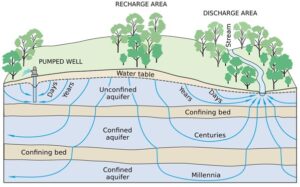
In regions like the Indo-Gangetic Plain, the ground is not uniform. It is made up of layers: e.g. Sand (permeable) , Silt (moderate) , Clay (impermeable) and many more. These layers control how water moves underground.
4. The Big Mistake: Misunderstanding Recharge
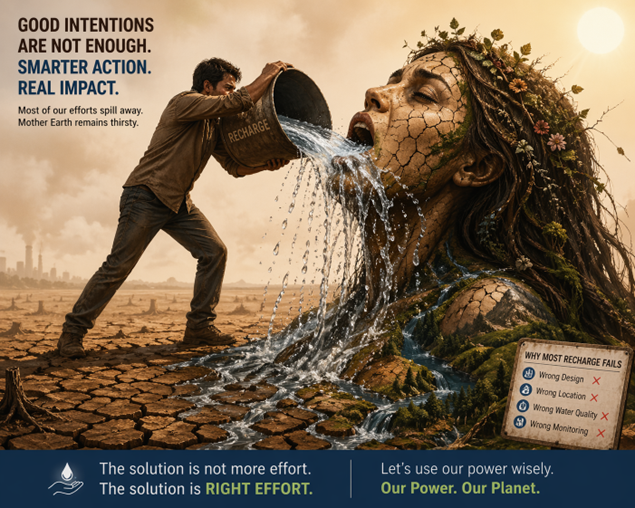
Most CSR programs and NGOs rely on: Check dams, Recharge pits, Recharge Pond, or other structures . But they often assume:
“If water is stored, it will recharge groundwater.” This is not always true.
The 5% Reality
In many cases, less than 5% of designed recharge actually reaches deeper aquifers.
Why? Clay layers block vertical movement , Water spreads laterally , Evaporation losses, Non-site-specific designs etc. etc.
5. Recharge vs Extraction Mismatch
- Recharge → shallow aquifers
- Extraction → deep aquifers
We recharge one system but extract from another.
6. The Illusion of “Water Positive”
Many projects report being “water positive”.
But: Recharge is overestimated , Extraction is under-accounted , Monitoring is weak
7. The Quality Crisis We Ignore
Recharge water often contains: Pollutants , Chemicals , Runoff contaminants etc.
This risks long-term groundwater degradation.
8. Rivers Are Sending the Same Warning
Rivers are drying, Water quality is deteriorating , Groundwater decline is a key driver
9. Climate Change: Changing the Rules
According to the World Bank: Rainfall is more intense, less frequent ; Less infiltration, more runoff
10. The Missing Link: Why Monitoring Matters More Than Ever
One of the biggest gaps in India’s groundwater story is not just how we recharge water—but how little we measure what happens after. Today, most efforts are judged by : Structures built , Storage created
Not by: Actual groundwater recovery, Aquifer health
What we don’t measure, we cannot manage.

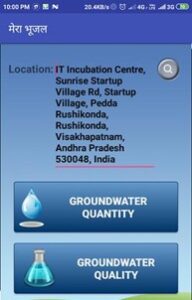
Today, Technology is enabler to monitor well the ground water recharge
IoT Sensors: Real-time groundwater levels ; Extraction tracking
AI & Analytics: Predict recharge zones; Optimize design
Satellite Monitoring: Track depletion trends , Validate ground data
Why Monitoring Changes Everything
Without monitoring:
Recharge = assumption
With monitoring:
Recharge = measurable reality
Organizations like Peoples WASH Solution LLP are quietly advancing this shift through improved systems like Pranjal Roof Top Rain Water Harvesting.
11. Learnings for NGOs /CSRs
The Right Way Forward: Using People’s Power Wisely
- Hydrogeology-based planning
- Deep recharge systems
- Water quality control
- Real impact measurement
This Earth Day, let’s redefine impact:
Not “how much we build”
But “how much actually reaches the aquifer.”
My takeaway:
“ Our Power, Our Planet” works only when power is used in the right direction.
Because:
We don’t just need more water conservation.
We need smarter water conservation.
Remember , We have only one planet to live.
#WorldEarthDay #WaterCrisis #Groundwater #Sustainability #ClimateAction #CSR #WaterManagement #India #OurPowerOurPlanet